
There's nothing to operate
When you publish a version, your API is live — on managed infrastructure, with its own PostgreSQL database, scaling and indexes handled for you. There is no server to choose, no container to build, nothing to patch, and no pipeline to maintain.
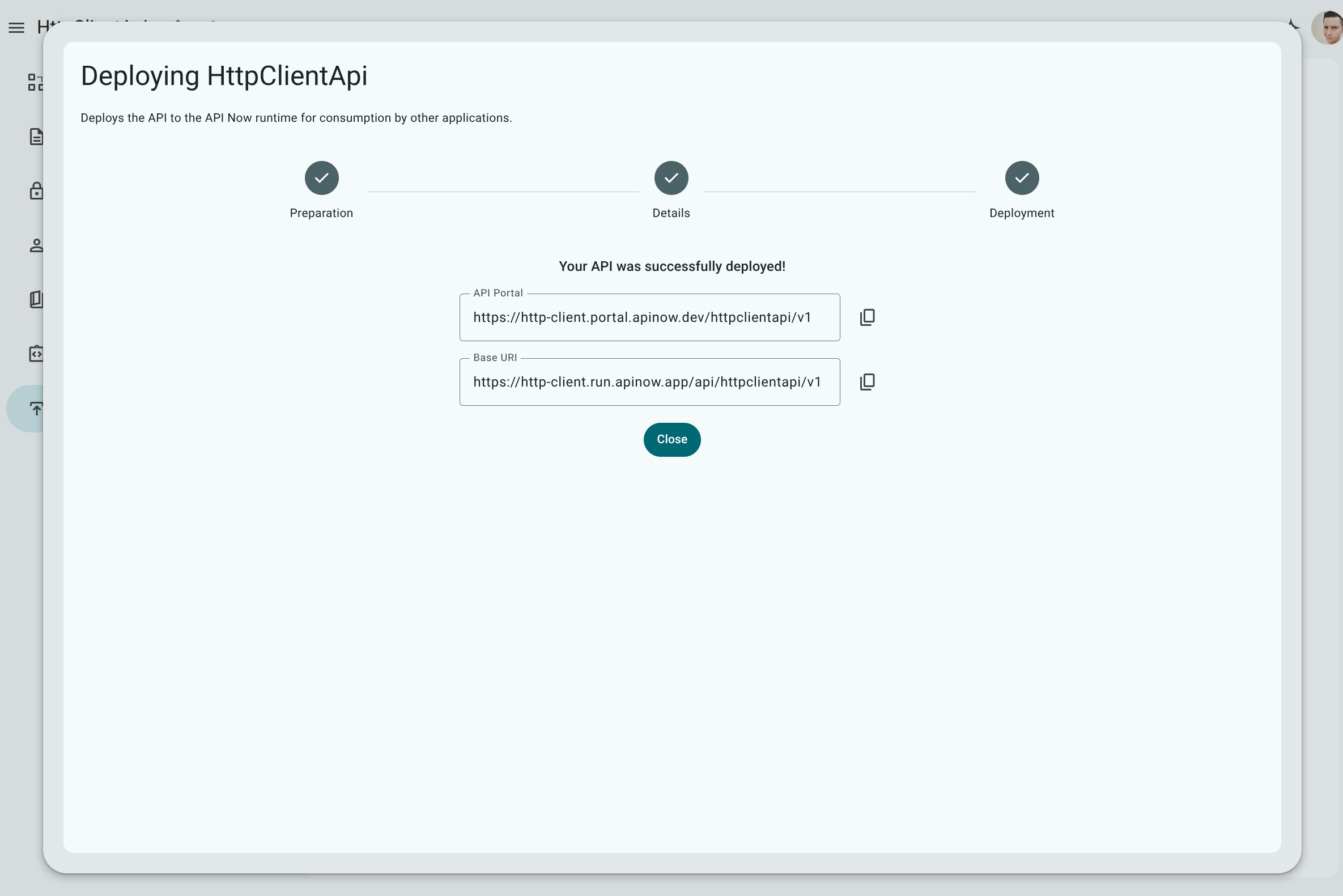
One action, and it's serving traffic
Publish a version of your API model. The runtime reads it, provisions or migrates the database to match, builds the routes, and starts serving. No build step to configure, no deploy script, no waiting on a pipeline. Roll forward by publishing again; every live API traces back to a specific model version.
v1.2.0 Model Changes
Added country mapping and verified schemas
Applying Postgres changes
Preparing isolated runtime instances...
Serving secure endpoints
The list you don't have to learn
No servers to size or pay for idle.
Provisioning is handled automatically behind your endpoints. The compute instances respond instantly and match current payload loads without manual container management.
No database administration.
Schemas, migrations and search indexes are applied directly from your model on every publish step. No SQL tables to alter manually.
No CI/CD pipeline management.
There's no build to configure, because there's no application code to build. The runtime interprets your declarative model definition.
No patching or upgrades.
The underlying runtime engine is securely maintained and patched under you without service interruptions or deploy actions.
No API gateway to configure.
Authentication, custom rate limits and standardized error reporting are baked directly into the secure request path.
No environments to assemble
Deploy to dev, staging, or production instantly. Each target environment is completely isolated with its own secure database.
THE ALTERNATIVE TO THIS PAGE ISN'T A CHEAPER HOST. IT'S HIRING SOMEONE TO RUN ONE.
Backups, restores, and who to call
Honest answers, because you're early and so are we.
A failed deployment cannot take your API down.
The new version is prepared first in isolation. Activating the traffic route and retiring the previous version is the final operation only when the new container and database migration are fully verified.
Your own database, not a shared table
Every organization gets its own PostgreSQL database, provisioned when you deploy, with queries routed to it. There is no shared table and no tenant column you have to trust — separation is physical rather than a filter someone could forget to apply.
File storage that isn't publicly readable
Upload through the API and files are stored securely in cloud object storage. Reads are served through signed links that expire after fifteen minutes, so a URL that leaks is already dead. Nothing is public by default.
Google Cloud Storage today, with S3 and others planned.
Why none of this needs code
Identity
The caller is authenticated and access scenarios are evaluated. Nothing is queried until this passes.
Before the write
Semantics act: timestamps populate, Country rules validate, and Password is salted and hashed securely.
The query
Behaviours become PostgreSQL queries against your organization's database, with ownership rules applied.
On the way out
Projection selects fields, files become signed links, and errors use RFC 7807 problem details.
EVERY STAGE IS DRIVEN BY YOUR MODEL. THAT'S WHY THERE'S NOTHING TO DEPLOY — THERE'S NOTHING TO COMPILE.
What to expect in beta
Multiple Environments Live Today
Dev, staging, and production targets exist today. Each has its own dedicated database instance and independent schema model.
Publish your first API with us
Closed beta, free while we're in it. We onboard a few teams each week and sit with you through the first deployment.
Want to look around first? Read the deployment docs →