
Draw your database.
Get a production backend.
Model your data visually, apply ready-made semantics like email, password or postalCode, and API Now runs it as a secure, documented API — with a real database behind it. Built for product managers, founders and data specialists.
No code, ever · Real Postgres behind it, not a spreadsheet
Works with Bubble, Webflow, Glide, FlutterFlow
You have the data and the idea.
The backend is what's stopping you.
“I have it in a spreadsheet and I've outgrown it.”
It works until two people edit at once, or until you need real validation, or until an app has to read from it. Then you need a database and an API, and that's a hiring problem.
“I got a quote for the backend and it was the whole budget.”
Months of work and a contractor's retainer to expose data you already have, in a shape you already know.
“My no-code frontend needs a real backend.”
Bubble, Webflow, Glide and FlutterFlow build the screens. The data layer underneath is still yours to solve.
ALL THREE ARE THE SAME PROBLEM: YOUR DATA HAS NO PLACE TO RUN.
From a description to a working API, in five minutes
I described the data I needed to the Gemini CLI. It built the domain, attached the right semantics, and deployed it. At the end, real HTTP requests against the live endpoint.
A short description of the data shapes I wanted.
Built the domain and attached the matching semantic modules.
Live HTTP requests against a deployed endpoint.
No application code was written at any point. The agent configured a model; the runtime does the rest.
Three steps, and none of them is writing code
Describe your data.
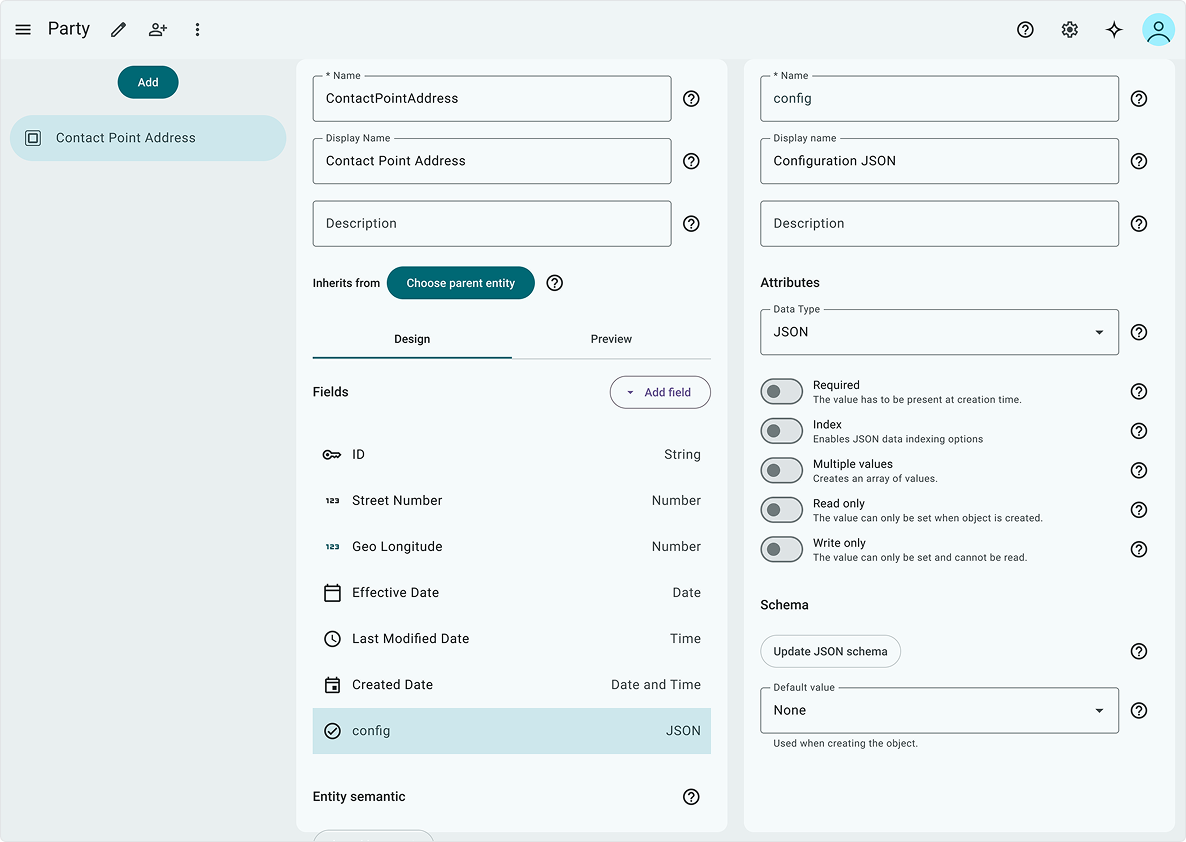
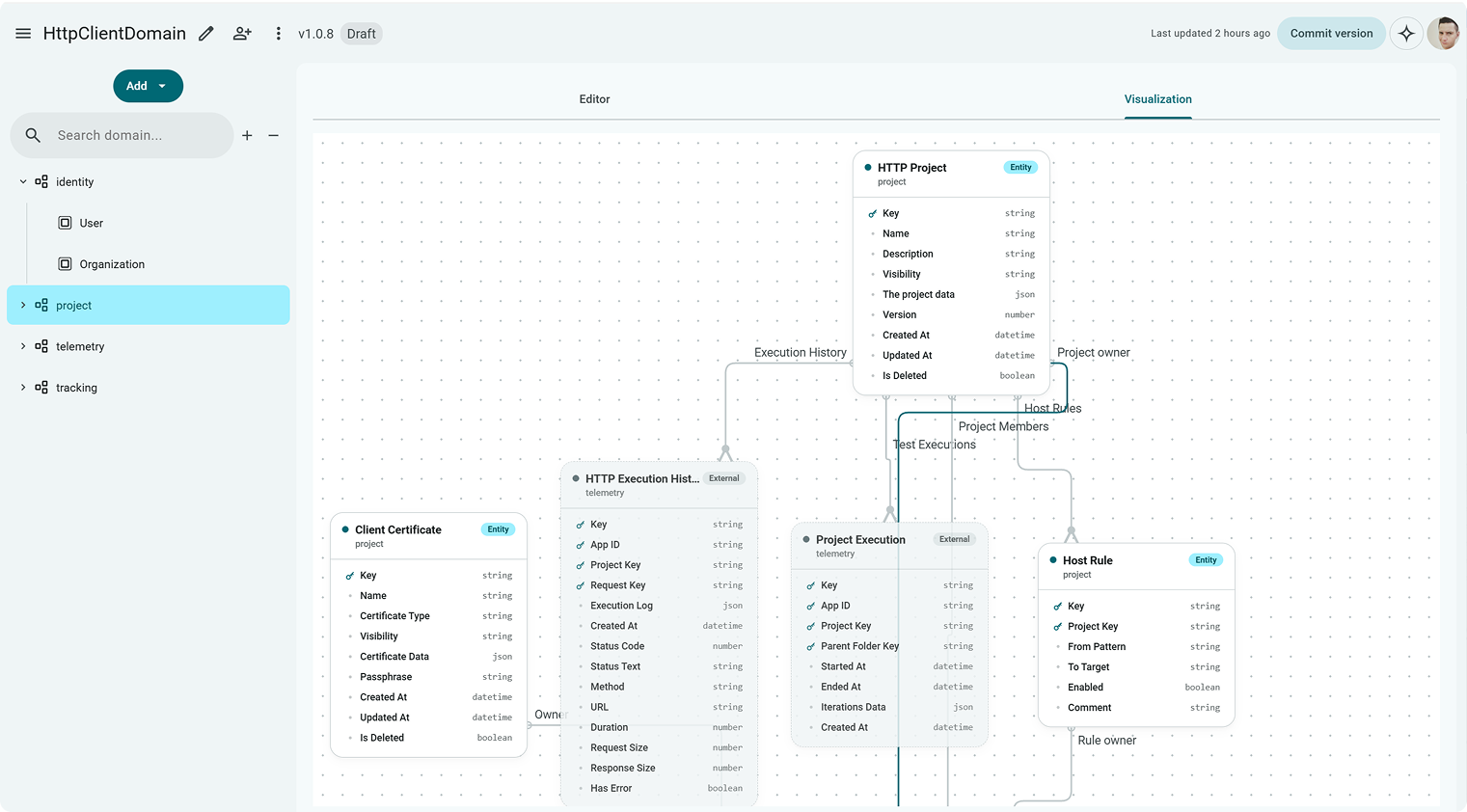
Entities, fields, relationships, on a canvas. No SQL, no migrations to write.
Apply semantics.
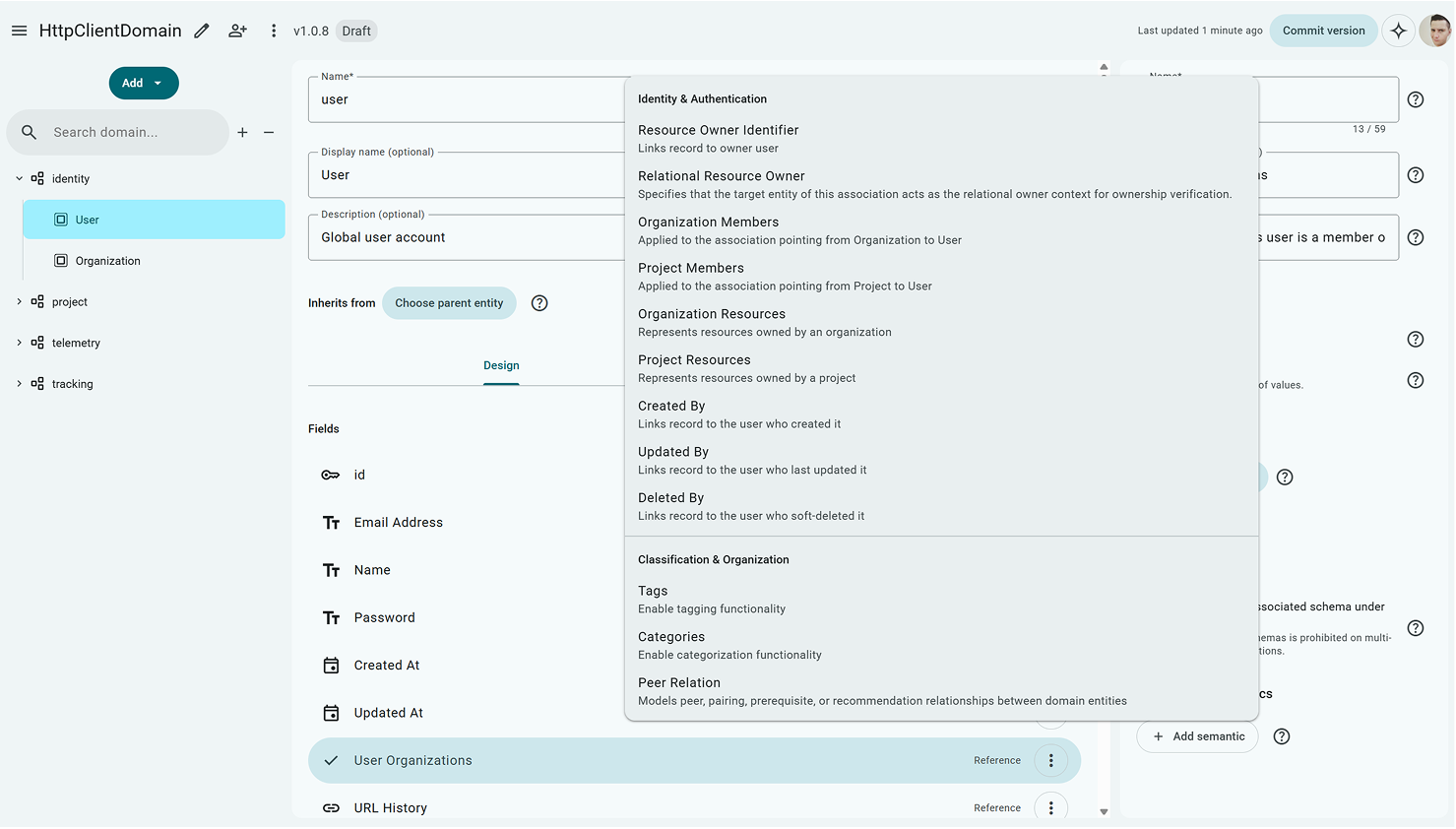
Drop in modules like email, password, postalCode or softDelete. Each one arrives already knowing how to validate and behave. You configure; you don't author logic.
It runs.
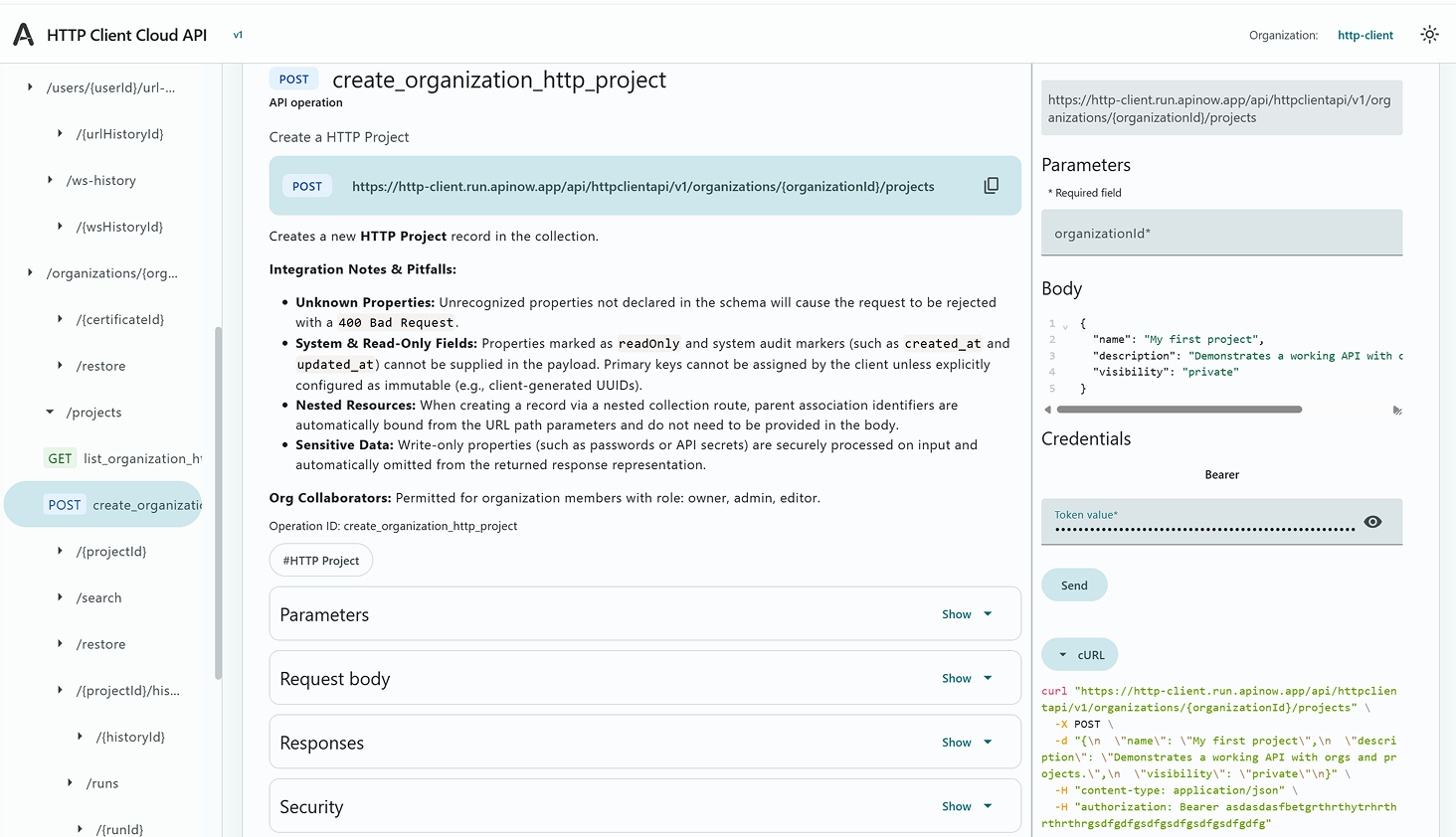
A secure, documented API over a real database, live. Change the model and the behaviour changes — there's no build to re-run and nothing to redeploy by hand.
NOTHING IS GENERATED FOR YOU TO OWN AND MAINTAIN. THE API IS SERVED FROM YOUR MODEL.
One tag, and the backend behaves
A semantic module is a tag you put on a field. The runtime then knows what that field means in the real world, and does the work that meaning implies — in the database, in validation, in security, in queries. The semantic tags catalog grows every day!
| Tag | What you'd otherwise build | What happens instead |
|---|---|---|
| Resource Owner Identifier | Row-level security checks in every single endpoint | Records are bound to their owner. Users only ever see their own. |
| Organization Members | Multi-tenant membership — the hardest schema decision in the project | Organizations, projects and membership, provisioned for you. |
| Peer Relation | A link table, its edge attributes, and cycle-detection logic | All three generated. Course prerequisites can't loop; pairings can carry an affinity score. |
| Password | Salting, hashing, and remembering to strip it from every response | Salted and hashed before storage, invisible to every read, enforced at the database. |
| Calculated / Derived | A compute layer, or a nightly job | price * taxRate and firstName + ' ' + lastName, evaluated in the database. |
Field structure — type, length — stays in your data model, because that's the single source of truth for it. The module adds the business rule on top. That separation is why the same semantic module works in any field, in any project, for any situation.
APPLY A TAG. YOUR DATABASE COLUMNS AND API VALIDATION RECONFIGURE TO MATCH.
Your frontend already works with this
API Now gives you a standard REST API with an OpenAPI spec, so it connects to Bubble, Webflow, Glide, FlutterFlow, or anything that can call an endpoint. Agents connect through the MCP server and can read and write your data in natural language.
 Bubble
One workspace, your whole team
Invite your team into the same organization and everyone works in the same Domain Modeler on the same models. Your data stays in your own dedicated database, not a shared one.
How this is different from what you've tried
| An AI Coding Agent | API Now |
|---|---|
Writes code you now own | Writes no code |
You must review, test and secure it | Modules are pre-built and reused |
A different result every run | Same model, same behaviour, every time |
Rules get buried in code, per project | Rules live in the module, everywhere |
Fast to a demo | Fast to something you can run on |
Other tools store your data. API Now runs it.
Secure without configuring anything
Your own database.
Every organization gets a dedicated database. No shared tables, no row-filter you have to trust.
Access decided before anything runs.
Permissions are evaluated ahead of your data rules, so a model change can never accidentally open access.
Standards, automatically.
OpenAPI specs and standard error formats, always current with your model.
Questions before you bring your data
Pricing isn't set yet, the beta is free, and beta users will get notice before anything is charged. You won't be surprised.
Small team, onboarding a few teams a week so each gets help modelling their first domain.
Bring us your data. We'll help you model it.
Closed beta, free while we're in it. We onboard a few teams each week and sit with you to model your first domain.
Want to look around first? Read the docs →